
Floresta é Sustentabilidade Award
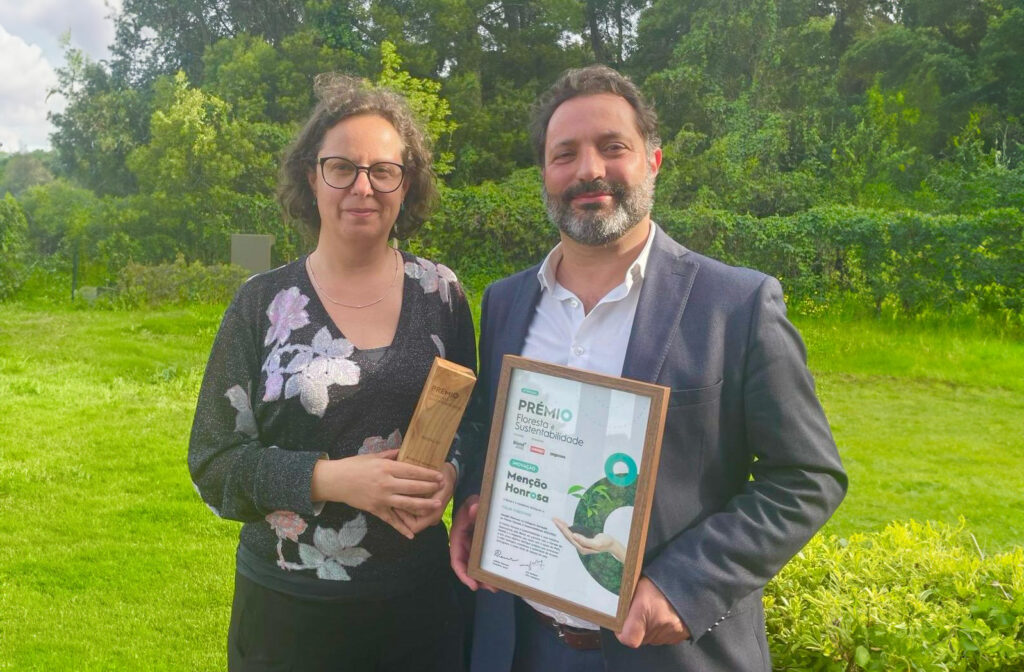
CoLAB ForestWISE®️ has been awarded an Honourable Mention in the fourth edition of the Biond Forest is Sustainability Award. The distinction is part of the Innovation category, which recognises “innovative projects from academia or other entities related to the area”, and was awarded for results with great potential for economic value in the areas of resource assessment and value chains, with relevant environmental and social impacts. Promoted by projects developed by our CoLAB, these results have created the conditions for the use by forest owners, managers and companies of mobile forest inventory applications and machine digitalisation processes that enable data collection during forestry operations, which is essential for decision-making. Carlos Fonseca, CTO of CoLAB ForestWISE®, and Alexandra Marques, Executive Coordinator of our CoLAB, received this Honourable Mention mentioning that “this recognition reaffirms CoLAB ForestWISE®’s commitment to innovation and sustainability, consolidating our role as a reference in the forest and fire domains”. The awards ceremony took place on 11 April and was opened by Gonçalo Almeida Simões, Biond’s Managing Director, and attended by Assunção Cristas, President of the Jury. The event also included a round table made up of António Henriques, Mayor of Castanheira de Pera, Carlos Rocha, President of Real Town Council, in Castelo de Paiva, José Manuel Gonçalves, President of Alferce Town Council in Monchique, and Margarida Guedes, President of the Pedrógão Grande Forestry Producers Association. The closing speech was given by António Redondo, Chairman of the General Board of Biond. The Floresta é Sustentabilidade Award is given every two years and has four categories (Economy and Society, School, Innovation and Journalism). It is an initiative developed by BIOND, in partnership with Correio da Manhã and Jornal de Negócios, with the support of PricewaterhouseCoopers, and aims to recognise and reward the best practices in forest management, emphasising the strategic importance of this sector for Portugal. Watch the video about CoLAB ForestWISE® produced by the initiative (PT).
Natural resin sector faces critical moment, Agroportal

If changes are not made in the natural resin sector, it risks becoming residual in the near future. Professionals believe that this is the key moment to decide whether to make a serious commitment to the sector or continue as it is. Professionals from the Natural Resin sector met this afternoon at a workshop of the RN21 Integrated Project, organised by CoLAB ForestWISE®, where concern was expressed for the future and various measures were pointed out to develop this area. In the 1970s, Portugal became the world’s second largest exporter of resin. Since then, this activity has seen a drastic decline, and there are currently around 500 resin producers in the country, according to Marco Ribeiro, president of Resipinus – Associação de Distiladores e Exploradores de Resina, one of the consortium’s partners. Read article (PT)
The RN21 Integrated Project Supervisory Board met to present the results of each measure and analyse agenda items, Jornal da Mealhada
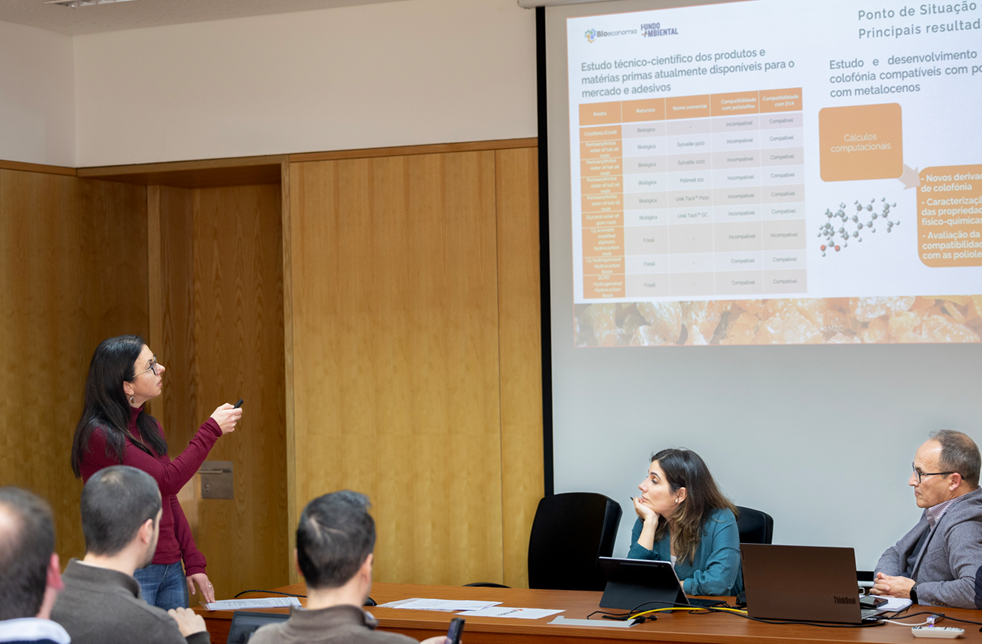
The RN21 Integrated Project Advisory and Control Board, the highest body in the consortium’s structure, met recently at Espaço Inovação Mealhada to discuss various issues relating to the management of the Integrated Project. CoLAB ForestWISE®, the leader of this aggregating consortium, hosted the meeting at which the first ordinary session of the Advisory Board also took place. The CTO of CoLAB ForestWISE®, Carlos Fonseca, emphasised the “importance of showing what good is being done in this consortium, which is essential to share with the partners who accompany us”. This was followed by the presentation of more than 20 measures, which form part of the three pillars on which the RN21 Integrated Project is based, namely: promoting the production of national natural resin (pillar I); strengthening the sustainability of the processing industry (pillar II); and the positive differentiation of Natural Resin and derived products (pillar III). Read article (PT)
The RN21 Integrated Project Supervisory Board met to present the results of each measure and analyse agenda items, Voz do Campo
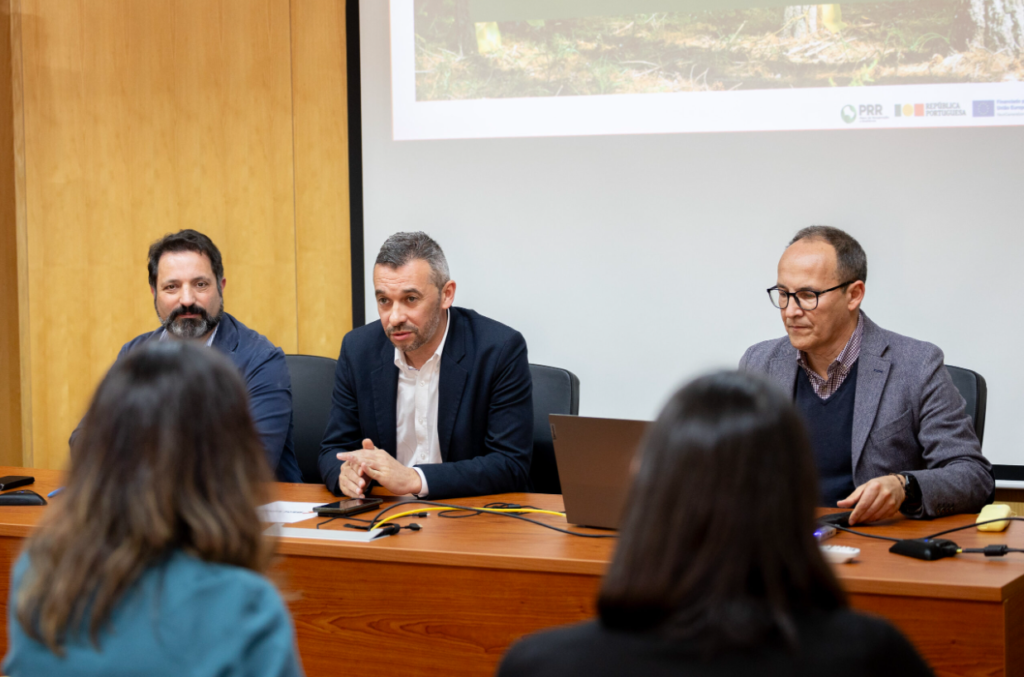
The RN21 Integrated Project’s Advisory and Control Board (COF), the highest body in the consortium’s structure, met on 28 February at Espaço Inovação Mealhada to discuss various issues relating to the management of the Integrated Project. CoLAB ForestWISE®, the leader of this aggregating consortium, hosted the meeting at which the first ordinary session of the Advisory Board also took place. The session was opened by Mealhada Municipal Executive Councillor Ricardo Santos, Project Director Rogério Rodrigues and CoLAB ForestWISE® CTO Carlos Fonseca, who emphasised the “importance of showing what good is being done in this consortium, which is essential to share with the partners who accompany us”. This was followed by the presentation of more than 20 measures, which form part of the three pillars on which the RN21 Integrated Project is based, namely: promoting the production of national natural resin (pillar I); strengthening the sustainability of the processing industry (pillar II); and the positive differentiation of Natural Resin and derived products (pillar III). The “Training and Professionalisation of Resin Workers” was one of the measures presented for Pillar I, the main aim of which is to develop an Academy capable of training resin extraction professionals. For Pillar II, one of the measures presented was the “Transition to renewables and efficient use of water and energy”, which aims to draw up a study and roadmap on best practices in the sustainable use of water and energy. Read article (PT)
Santa Comba Dão: community artwork recalls 2017 fires, Mais Beiras
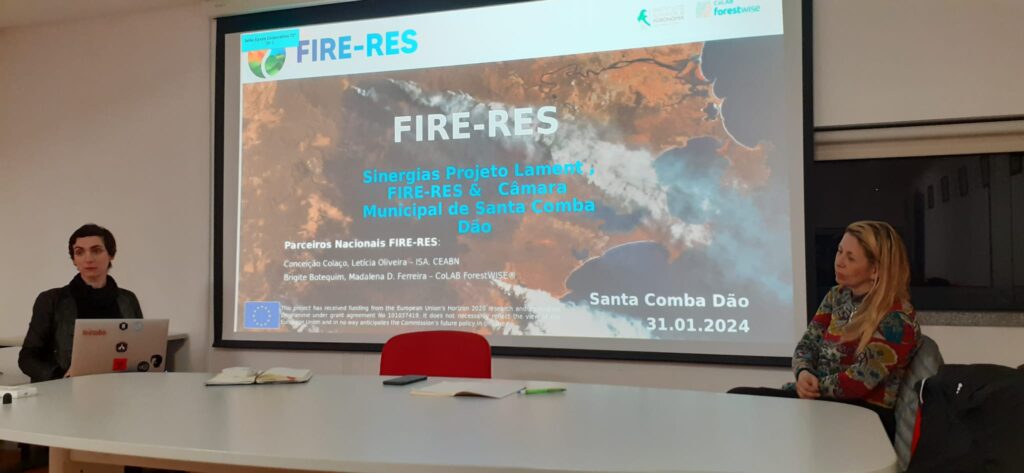
Last week, the Santa Comba Dão Volunteer Fire Brigade headquarters hosted the presentation of a community artwork resulting from the artist residency associated with the experience of the 2017 fires, which took place over four days in the municipality. The initiative was organised by a group of artists and researchers from the international FIRE-RES and Lament projects, with the common aim of studying the recovery of communities after major disasters. Made up of members of various nationalities, the artistic and scientific collective travelled the geography of the fire, in a joint action with the municipality of Santa Comba Dão and the Viseu Dão Lafões Intermunicipal Community. Read article (PT)
Lament production update: community engagement in Portugal, Science, Art & Society | European Comission
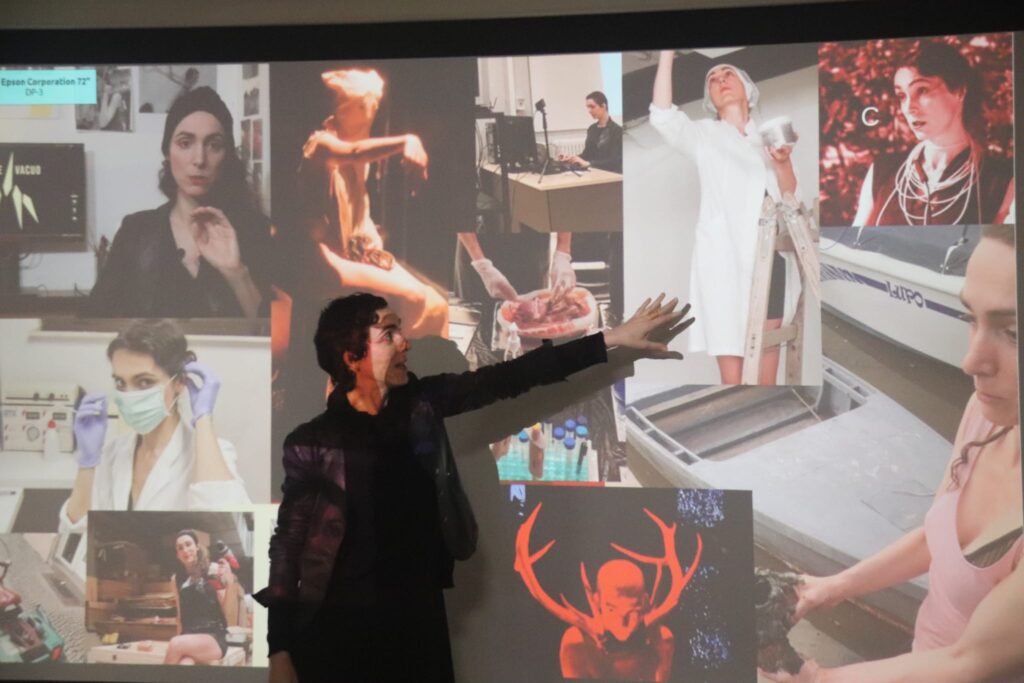
As part of the community engagement aspect of the project Lament and together with the FIRE-RES initiative, led by the CEABN InBIO, of the Instituto Superior de Agronomia CoLAB ForestWISE, bio-artist Margherita Pevere and activist Celine Charveriat have spent the last week in Santa Comba Dão (PT), working with local people from an area which has been affected by large scale wild-fires. This work follows the project’s aim to engage with ecological grief and post-fire restoration, following the effect of wildfires on nonhuman and human ecosystems, and exploring how to live within these changing ecosystems in changing times. Read the article
Mortágua: Painçal chosen as pilot intervention area for European project “RESIST”, Viseu Now
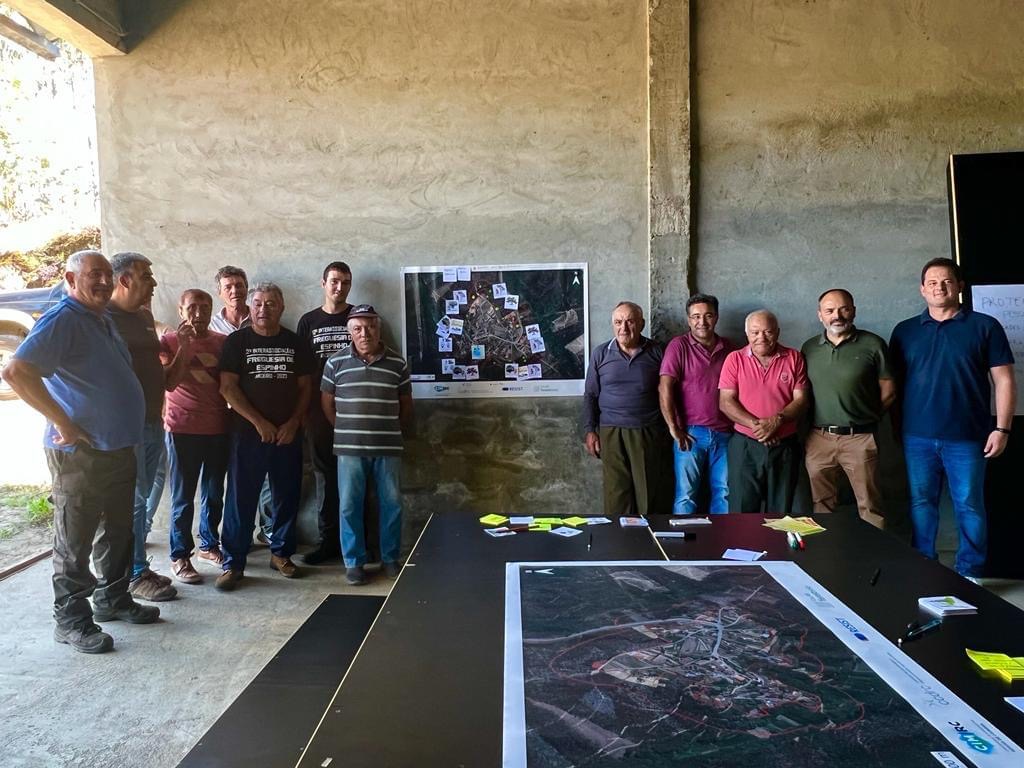
Mortágua is one of the 14 municipalities in the Coimbra region that is part of the RESIST project, which aims to increase the resilience of territories in the face of climate change, particularly the risk of rural forest fires. In the case of Mortágua, the project focuses on the village of Painçal and the implementation of a “Village Condominium”, with forestry operations planned (creation of fuel management strips to protect the village) and changes to land use and occupation by planting native species that are more resilient to fires in these strips. In this way, the aim is to ensure greater resilience of the population to rural fires and, consequently, to increase the safety of people and property. During 2023, several actions have already been carried out, such as a site visit to collect data/information, and an awareness-raising workshop to publicise the project among residents and liaise with landowners about the type of interventions to be carried out. This project is being monitored and supported by the municipality’s Technical-Forestry Office, with the collaboration of the Painçal Residents and Friends Association. The actions on the ground will take place throughout this year and cover an intervention area of 10.1 hectares. RESIST is a five-year project funded by the European Union (European Horizon Programme) involving twelve areas of Europe, which arose from the need to make regions more resilient. RESIST is a five-year project funded by the European Union (European Horizon Programme) involving twelve areas of Europe, which arose from the need to make regions more resilient in the face of emerging environmental challenges. The Centre of Portugal is one of the four leading regions in the project, with Coimbra being one of the demonstration territories as part of the mission to adapt to climate change, as well as the Médio Tejo region. In the Coimbra region, innovative solutions will be tested that focus on improving the participatory and governance model of the AIGP (Integrated Landscape Management Areas) and the Village Condominiums, with the aim of promoting the improvement of existing vegetation structures combined with the reduction of fuel loads, in order to increase resilience to rural fires in these locations. These activities will be developed by CIM-Região de Coimbra, in partnership with the Centre’s Regional Coordination and Development Commission (CCDRC), CoLAB ForestWISE®, the municipalities involved and local agents.
Natural resin: a key raw material for the sustainable bioeconomy, Voz do Campo
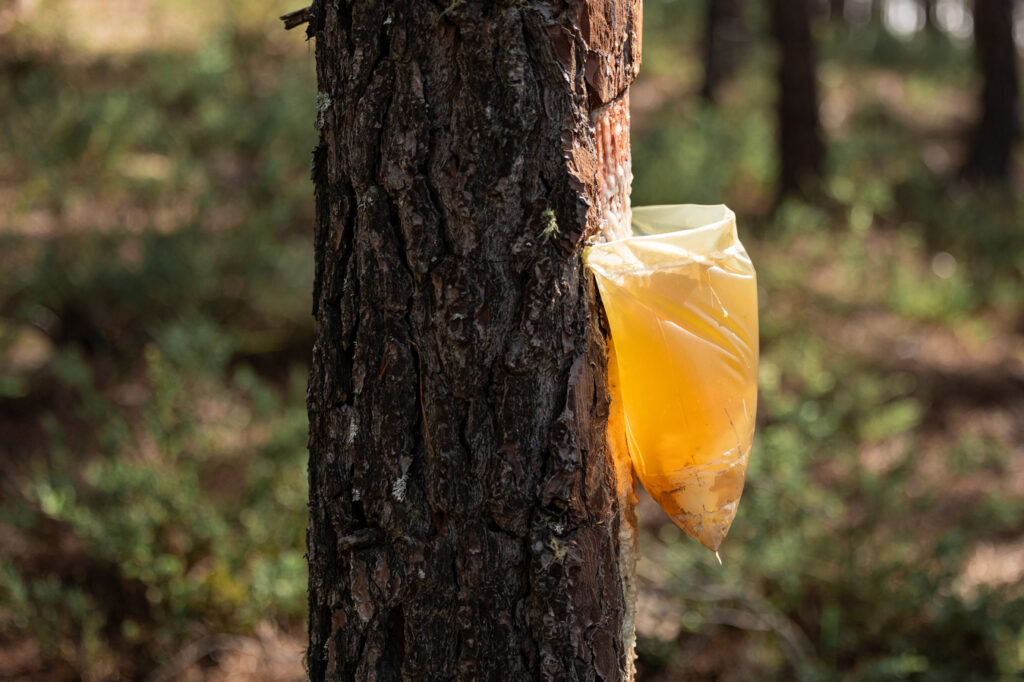
The use of natural resin and its derived products has suffered significant changes over time, reflecting the improvements associated with the extraction process and technological and industrial development. The RN21 integrated project brings together, for the first time, the entire value chain of the natural resin sector in Portugal, in a joint effort to leverage the entire sector. It will contribute to achieving the goals of the European Green Deal, which aims to reduce net greenhouse gas emissions by at least 55 per cent by 2030, through the development of new products. Read article (PT)
The value of pastoralism in mountain areas, Florestas.pt
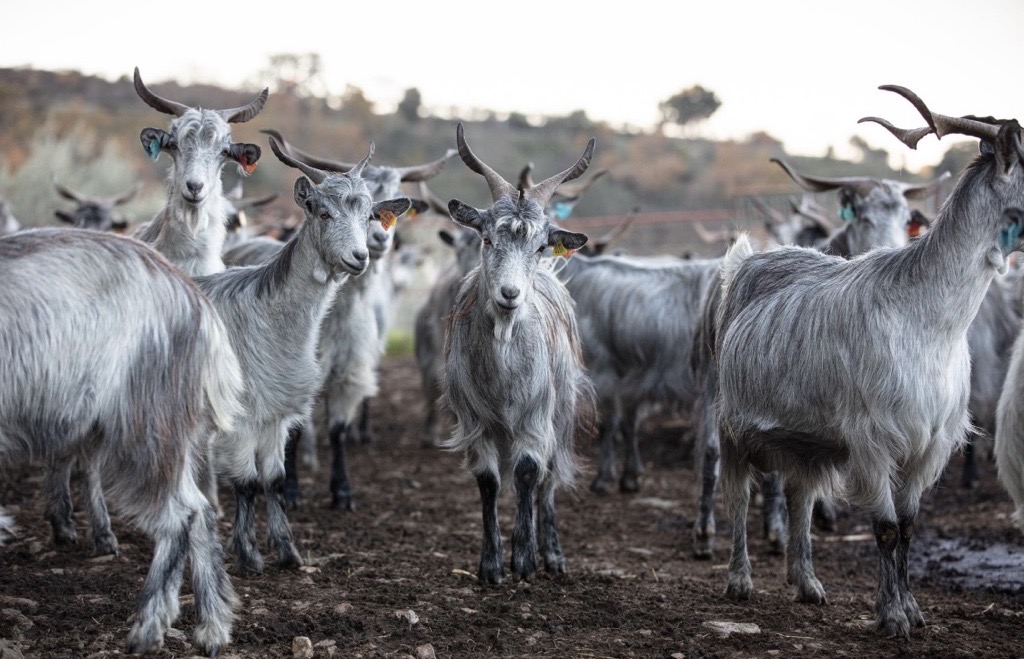
Despite the importance of pastoralism, which in many mountain regions supports the settlement and subsistence of populations and contributes to reducing the risk of fire, there is still a lack of appreciation and participation of pastoralists in the planning of strategies and initiatives aimed at land management. With around 500 million shepherds worldwide, pastoralism is responsible for significant socio-economic and environmental contributions in more than 100 countries. In Europe, according to the Food and Agriculture Organisation of the United Nations (FAO), it is estimated that there are around 15 million hectares devoted to agropastoral systems. In Portugal, permanent pastures (natural and improved) account for approximately 1.92 million hectares. The importance of pastoralism in Portugal is recognised in the texts of the first charters and reinforced by other authors due to the economic, social, environmental, historical and cultural importance it represents for many rural territories. It is especially in the higher altitude territories that pastoral activity has the greatest tradition. Read article (PT)