
RESIST Project: CoLAB ForestWISE highlights wildfire resilience solutions based on participatory strategies involving landowners and communities
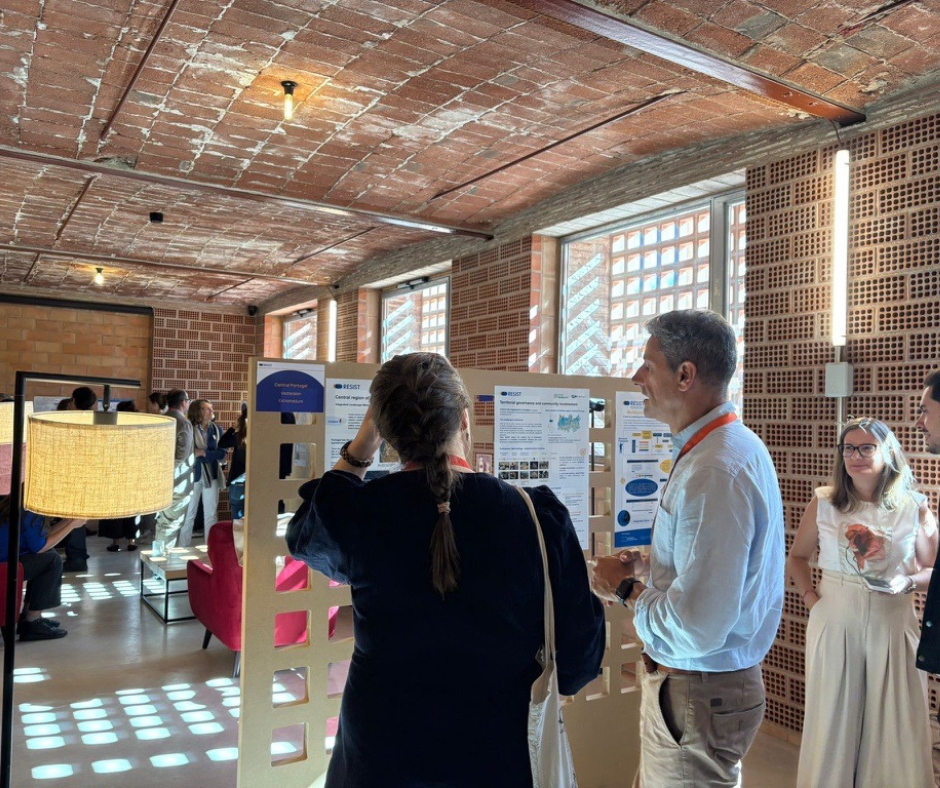
We participated in the latest meeting of this European project, which brought together more than 50 partner organisations in Terrassa (Spain) to share progress and climate change adaptation solutions being developed by different regions in response to the risks they face. Represented by Sandra Valente and Jorge Cunha, CoLAB ForestWISE presented the work carried out in the Region of CIM Coimbra, particularly the components that make up the solutions being implemented to increase resilience to wildfires. Special focus was given to community engagement strategies aimed at reinforcing the governance of public policies driving landscape transformation in Integrated Landscape Management Areas and Village Condominium initiatives, where more than 300 people and over 25 organisations are already involved. RESIST is a European project involving 56 entities (from 15 countries), with a total investment of €26 million (of which over €5.6 million are allocated to Portugal). It aims to develop innovative demonstration projects in four regions and transfer knowledge and solutions to eight additional regions, in order to increase their capacity to adapt to climate change. One of these demonstrators will be implemented in the Central Region of Portugal (in the territories of the Coimbra Region and Médio Tejo), with an estimated budget of almost €2.5 million. The activities focus on developing solutions to promote more effective forest management and valorisation, reducing the impact of climate change on the region — particularly the occurrence of large wildfires.
FIRE-RES: Last meeting of the Community of Wildfire Innovation in Portugal
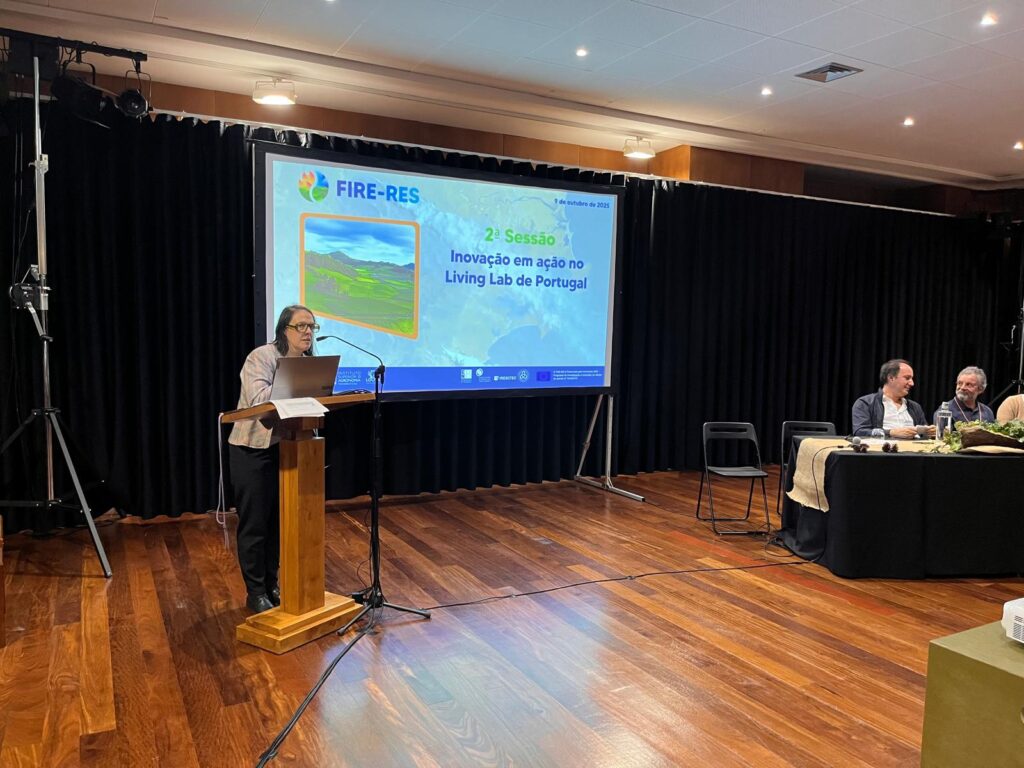
On 9 October 2025, the Carlos Reis House-Museum, in Lousã, hosted the 4th Meeting of the Wildfire Innovation Community (CWI), the final gathering of this community within the framework of the European project FIRE-RES. Organised by CoLAB ForestWISE and the School of Agriculture (ISA/ULisboa), with the support of the Municipality of Lousã and the Municipality of Penafiel, the event marked the end of a 46-month cycle of intense cooperation between science, practice, and local communities. The meeting brought together researchers, technicians, practitioners, local agents, decision-makers, and community representatives for a moment of reflection and future-oriented discussion, reinforcing the crucial role of local authorities in consolidating the Portuguese Living Lab, established in the territories of Lousã and Vale do Sousa. Over the past four years, this living ecosystem enabled the testing, implementation, and replication of innovative solutions with real impact on the ground. A day of reflection, knowledge sharing and collective building Throughout the day, the main lessons learned from the FIRE-RES project were revisited, and the Innovation Actions developed in Portugal were presented. These actions addressed key topics such as field team safety, the safe use of fire, risk communication, training platforms, and strategic planning for wildfire suppression and post-fire restoration. Technological and social solutions tested within the Portuguese Living Lab were also highlighted, including the ForestSIM® simulator (developed by 2BForest) and the ImFire decision support system (developed by REN), alongside innovations from other European and Chilean Living Labs, such as Firefence®, EmberEye®, and awareness videos developed by AGIF. The event concluded with a collaborative session dedicated to the 2030 Roadmap — a strategic planning exercise focused on the future of fire-resilient landscapes. Beyond FIRE-RES According to the organisers, this meeting marked the end of a cycle, but also the beginning of a new phase. For Brigite Botequim, Senior Researcher and Co-Leader of the Portuguese Living Lab at CoLAB ForestWISE, “it is time to return to the community what we have built, to recognise the role of every partner, and to consolidate the foundations for the future of our FIRE-RES network.” José G. Borges, Associate Professor at ISA/ULisboa and Work Package 2 Coordinator, highlighted that “addressing wildfire risk requires an integrated approach grounded in science, strategic planning, and the active participation of decision-makers and communities.” The initiative reinforced the importance of sustaining the Wildfire Innovation Network and enhancing synergies between territories and communities, aiming to build landscapes that are safer, better adapted, and more resilient.
More Resilient Forests: Agenda transForm Invests in Data, Innovation and Specialised Services
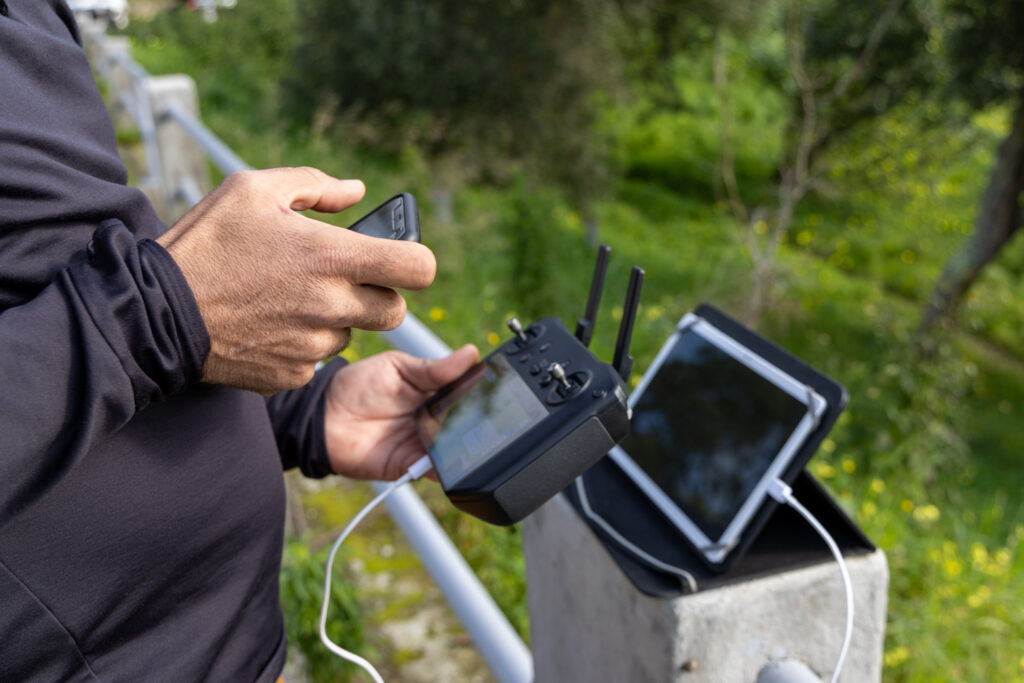
The Portuguese forest faces major challenges: wildfire risk, pests and diseases, climate change, and the need for more efficient management. Added to these is the scarce human presence in forest territories, which increases vulnerability and hinders active, continuous management. To address these challenges, the transForm Agenda is developing solutions and technologies that enhance the resilience, productivity and future-readiness of forests. New mapping tools are already underway to monitor land use, vegetation loss, and changes in fuel break areas. These products will support risk anticipation and inform prevention strategies. In parallel, innovative models will enable the estimation of biomass and stand age, prediction of post-fire vegetation dynamics, and detection of pests and diseases. These tools will provide a more informed and comprehensive understanding of forest territories. Another key innovation involves the installation of optical and thermal cameras on very high-voltage electricity towers, covering over one million hectares — many in areas with low human occupation. These cameras are integrated into a data monitoring and decision support system that enables early detection of risks, particularly rural fires. Supported by real-time fire simulators, this system can predict fire behaviour and optimise on-the-ground response. The transForm Agenda is also improving access to forest and land-use data through GIS-based information systems and a new Territorial Information Portal. Integrated management systems for forest producers’ organisations are being developed, along with mobile applications for certification support and real-time land registry software using drones. These solutions simplify processes, increase transparency, and help expand the area of certified and actively managed forest. Within a forest breeding programme, new genetically improved varieties of maritime pine and eucalyptus are being developed, with greater effectiveness and resistance to pests and diseases. Conservation actions are also being carried out for high-value native species, such as oaks and strawberry trees. These developments not only ensure higher productivity and climate adaptability but also contribute to genetic diversity preservation and the restoration of ecologically valuable habitats. In the case of cork oak, work is ongoing to develop innovative silvicultural models, select plants more resilient to changing climate conditions, and research the control of cork oak moth (Pseudococcyx turionella). These actions aim to increase the productivity, profitability and resilience of cork oak stands. Through the creation of a national network of experimental forest plots, long-term monitoring of different species and forest systems is being strengthened. This network, already comprising more than 300 installed plots, provides essential data to adjust silvicultural techniques and forest management practices to better respond to the impacts of climate change. Another important contribution from the Agenda is the development of standardised methodologies for the assessment and valuation of forest ecosystem services — such as carbon sequestration, biodiversity conservation, soil protection, and water regulation, among others. Led by Altri Florestal and under the technical-scientific coordination of CoLAB ForestWISE, the transForm Agenda brings together a consortium of 56 partners in an unprecedented effort of cross-sectoral cooperation. Structured into six strategic pillars and encompassing 30 collaborative projects, transForm seeks to promote a structural transformation of the Portuguese forestry sector, covering the entire value chain. Its mission is to significantly contribute to sustainable forest management, optimise industrial processes, and strengthen the competitiveness of the sector, ensuring a stronger connection to markets and end users. To this end, the Agenda is developing 11 new Products, Processes and Services (PPS), supported by digital technologies and marked by a high level of innovation.
Remote Detection of Forest Disturbances Project Begins Field Data Collection
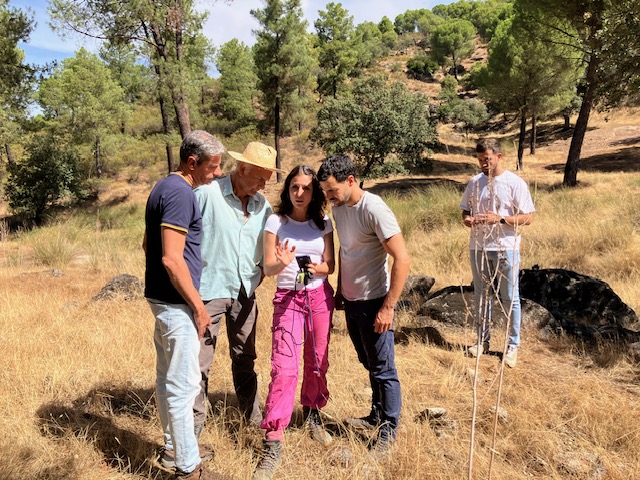
At the beginning of September, a field visit was carried out to the study areas of the TREAD project in Córdoba, with the aim of discussing protocols and strategies for field data collection. The visit brought together members from the teams of several project partners, namely the Spanish National Research Council (CSIC), the University of Córdoba (Spain) and CoLAB ForestWISE. Following this visit, during the month of September, the CoLAB ForestWISE team began field data collection in two study areas in Portugal: a cork oak montado and a maritime pine stand. In both areas, visual inspections of the trees’ health status are being conducted, along with the collection of samples for phytosanitary analysis and the gathering of forest inventory data. Simultaneously, the University of Córdoba team also conducted a field data collection campaign in the selected study plots in Spain. In parallel, the CSIC team carried out the first spectral and thermal data acquisition in the Portuguese and Spanish study areas through drone flights. In the coming months, work will continue on the 2025 field data collection campaign — the first of two planned within the project — and on data processing, aiming at the development of early detection models for pest and disease symptoms, using remote sensing data and functional parameters.
CoLAB ForestWISE enters a new cycle with the inauguration of its Governing Bodies for the 2025–2028 triennium.
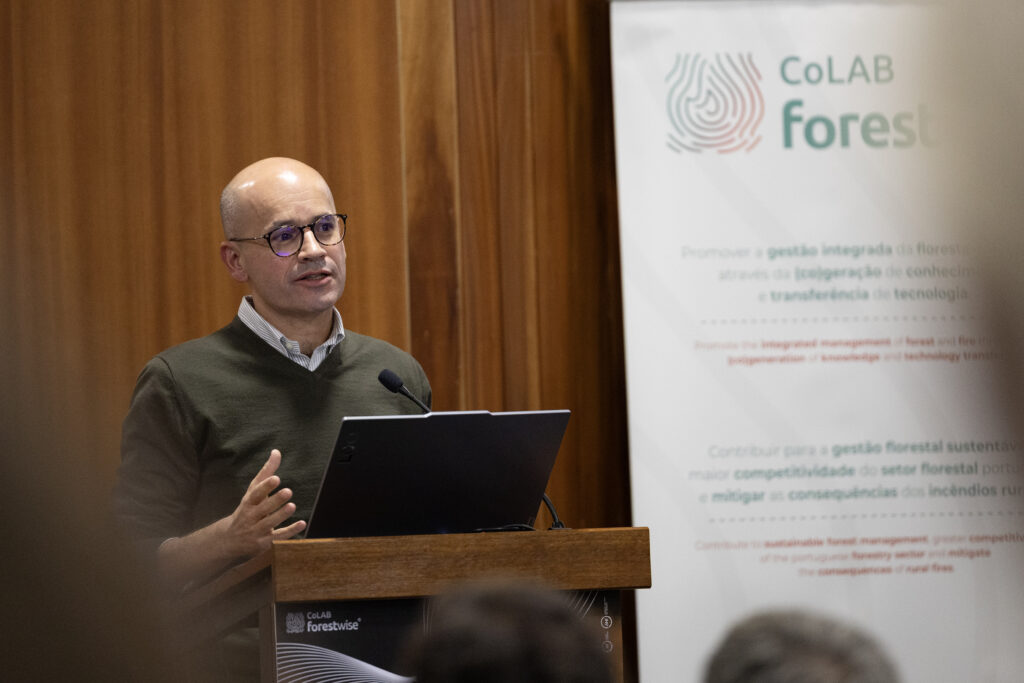
This renewal marks an important moment in the institutional life of the CoLAB, reinforcing its commitment to solid, representative governance aligned with the strategic challenges of forestry and fire in Portugal. We extend our sincere thanks to the outgoing members for their dedication throughout the previous term and warmly welcome the new representatives, confident that they will contribute to consolidating the mission and vision of CoLAB ForestWISE. The Governing Bodies for the 2025–2028 term are as follows: Board of Directors Nuno Calado, Sonae Arauco (President) Paulo Américo, Amorim Florestal Pedro Sousa, The Navigator Company Pedro Marques, REN Ricardo Messias, E-REDES Ricardo Bento, University of Trás-os-Montes e Alto Douro Paulo Mateus, Agência para a Gestão Integrada de Fogos Rurais, I.P. Luís Tarelho, University of Aveiro Nuno Ribeiro, University of Évora General Assembly Board Paula Soares, School of Agriculture, University of Lisbon (President) Miguel Silveira, Altri Florestal (Secretary) Audit Committee Alfredo Dias, University of Coimbra João Claro, INESC TEC KPMG & Associados – Sociedade de Revisores Oficiais de Contas, S.A.
ForestWISE 365: Annual event brought together experts for a Networked Forest
The annual CoLAB ForestWISE event, held last Friday, 26 September, in the Geosciences Auditorium of the University of Trás-os-Montes and Alto Douro (UTAD), brought together strategic actors in the fields of forestry and fire, including universities, companies, public entities, associations, interface centres, among other national and international partners, to discuss the challenges of forestry and fire on a national and global scale. The session, which was attended by over 80 participants, was opened by the UTAD Rector, Emídio Gomes, who highlighted the work carried out by CoLAB ForestWISE and the fact that it is based in Vila Real, which reinforces the strategic positioning of the interior, contributing to the strengthening of research and more balanced public policies. This was followed by a speech by Miguel Silveira, Executive Director of Altri Florestal and outgoing Chairman of the Board of Directors of CoLAB ForestWISE, who highlighted the characteristics that distinguish the Forest and Fire CoLAB and its team, in particular their ability to coordinate, manage and execute with precision, their ability to adapt to change and identify new opportunities and services. He concluded his speech by introducing the new Chairman of the Board of Directors, Nuno Calado, Director of Sustainability and Forestry at Sonae Arauco, who is now taking up his duties alongside the rest of the new Board. Nuno Calado emphasised CoLAB’s role in producing applied knowledge aimed at solving forestry challenges. José Gaspar, Chief Technology Officer (CTO) of CoLAB ForestWISE, emphasized the importance of cooperation to strengthen internationalization and respond to the major challenges facing the sector. He concluded by highlighting the importance of generating value in all products, in order to contribute to a more resilient territory and ensure remuneration and appreciation for forest producers. This was followed by a session featuring speakers, mostly remotely, from international institutions, namely the CESEFOR Foundation – Center for Services and Promotion of Forestry and the Forest Industry of Castile and León (Spain), the CETEMAS Foundation – Forest Technology Center of Madeira (Spain), FORAC – Research Consortium of Laval University (Canada), IPEF – Institute for Forest Research and Studies (Brazil), LUKE – Natural Resources Institute (Finland), and Skogforsk – Forest Research Institute (Sweden), sharing insights about internationalization and innovation in the forestry sector. The initiative was also attended by the Secretary of State for Forestry, Rui Ladeira, who reinforced the need to create a valuable forest capable of responding to the specificities of the country, and recognized CoLAB ForestWISE as a strategic player in the search for concrete solutions for the sector. In this context, he also highlighted the Forest Intervention Plan (PIF), focused on enhancement, resilience, ownership, and governance, in line with CoLAB’s mission. At the end of the session, participants were also able to visit the poster session, where projects, products, and services developed by CoLAB ForestWISE were presented, with a focus on forest and fire management. ForestWISE 365 also marked the 7th anniversary of this Collaborative Laboratory. Since September 29, 2018, the team has worked with more than 50 companies, over 30 universities, R&D centers, and Collaborative Laboratories, and more than 15 industry associations and public administration entities, involving hundreds of stakeholders, with an impact on knowledge transfer, technological innovation, and sustainable development in the Portuguese forestry sector.
Impact study of the ‘R&D Mobilisation Programme for the Prevention and Combating of Forest Fires’ analyses the results of research projects supported by FCT
Report produced by CoLAB ForestWISE was presented on 18 September and is now available Webinar “Path to impact: Benefits of scientific research for rural fire management” brought together representatives from academia, the public and private sectors, and civil society €15 million was invested in 56 projects under the R&D Programme for the prevention and fighting of forest fires, promoted by FCT between 2017 and 2019 The report ‘R&D Mobilisation Programme for the Prevention and Fighting of Forest Fires – path to impact’ was presented on 18 September at the webinar ‘Path to impact: Benefits of scientific research for rural fire management’. This study presents an analysis of the results produced and an impact assessment of the research projects developed under the R&D Programme for the Prevention and Combating of Forest Fires, promoted by the FCT between 2017 and 2019, which was created by Council of Ministers Resolution No. 159/2017, following the major fires of 2017. Through this call for proposals, the FCT funded 56 scientific research and technological development projects, with an investment of around €15 million. This event was organised by the Foundation for Science and Technology (FCT) and CoLAB ForestWISE, the Collaborative Laboratory for Integrated Forest and Fire Management, which was responsible for producing the report, which is now available for consultation. The webinar, which had over 100 participants, promoted a relevant, useful and timely debate in a round table moderated by José Manuel Mendonça, Director of INESC TEC and Professor Emeritus at the University of Porto. Under the theme ‘transfer and appropriation of research results as a driver for societal impact’, the round table was attended by Daniela Fraga, Deputy Head of the National Emergency and Civil Protection Command, Luís Fontes, Research and Development Manager at Altri Florestal, Manuela Pintado, Professor at the School of Biotechnology of the Portuguese Catholic University, and Paulo Lucas, Member of the Board of Zero – Sustainable Earth System Association. During this moment of reflection and experience sharing, it was possible to explore different perspectives on the evolution of the relationship between entities of the National Scientific and Technological System and various organisations in society, identifying challenges and opportunities associated with this process. In addition, key factors that can support strategies to strengthen the transfer and appropriation of applied research results were discussed, with the aim of increasing their impact on society. The R&D Programme for the prevention and fighting of forest fires had the mission of promoting research and innovation activities aimed at solving specific problems and disseminating knowledge for citizen mobilisation, with a view to fostering an active scientific culture in the various dimensions of forest planning, management and enhancement, as well as in the prevention and fighting of rural fires.
Agenda transForm at Agroglobal 2025
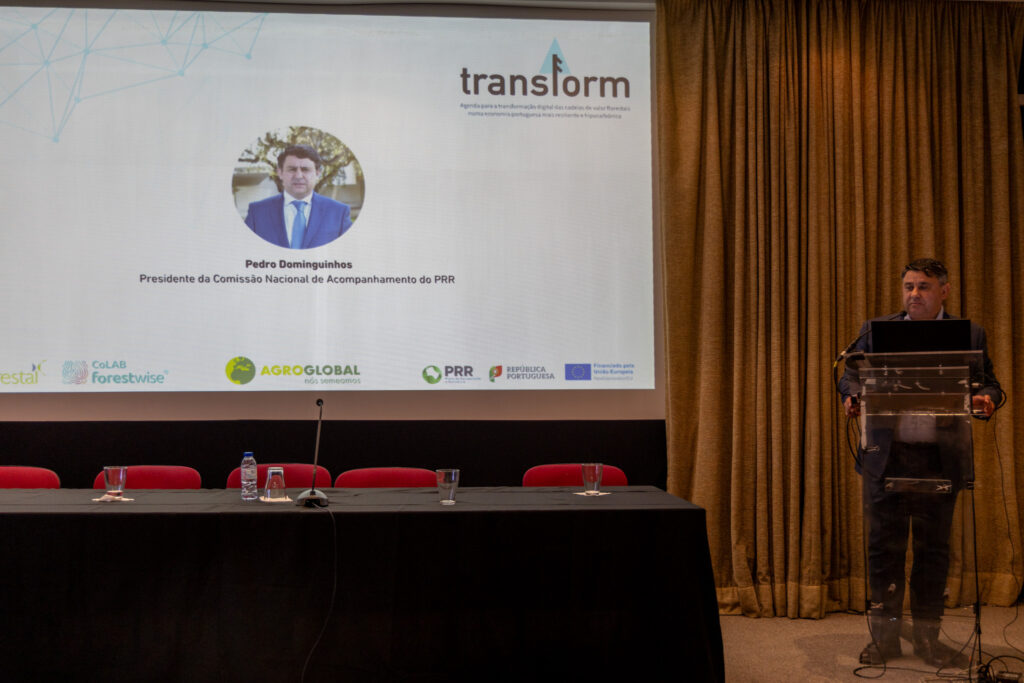
Agenda transForm participated at the Agroglobal 2025 edition, held at CNEMA in Santarém, with the organization of the session “transForm(ing) the Forestry Sector”, which took place on the morning of 11 September. This initiative aimed to give visibility to the actions of the Mobilising Agenda for the Digital Transformation of the Forestry Sector, highlighting the progress made and contributions to a more innovative, competitive, and sustainable sector. The session opened with an institutional address by Miguel Silveira, Executive Board Member of Altri Florestal, the leading entity of the consortium, who presented the strategic vision and the main milestones achieved, underlining the cross-cutting impact of the transForm Agenda. The highlight of the morning was a roundtable discussion that brought together representatives from various partner entities, enabling a broad debate on the contributions of the transForm Agenda to areas such as innovation, mechanisation, certification, digitalisation, and sustainable forest management. The diversity of perspectives shared reflected the thematic breadth of the Agenda and its transformational potential. Pedro Dominguinhos, President of the National Monitoring Committee of the PRR, closed the session by emphasising the role of the transForm Agenda as a driver of modernisation and competitiveness in Portugal’s forestry sector. In the afternoon, a technical session was held on the GEOFOR project – Geographic Databases and Applications for the Forest, also part of the transForm Agenda. Organised by 2BForest, in collaboration with CoLAB ForestWISE, the session focused on digital innovation for forest management, with particular emphasis on the development of the new Territorial Information Portal (PoInT), led by the Directorate-General for Territory (DGT). The interoperability of PoInT with digital tools such as ForestSIM®, e-Globulus, and the new ForestSIM Mobile® application, developed under the project, was explored in detail. Representatives from DGT, the Institute for Nature Conservation and Forests (ICNF), RAIZ, and the School of Agriculture (ISA – University of Lisbon) participated in a debate centred on the importance of open data availability, the adoption of OGC API standards (internationally recognised specifications designed to ensure interoperability between systems and enable efficient data exchange), and collaboration between public entities to strengthen the usefulness and integration of geographic data in forest management. The presence of the transForm Agenda at Agroglobal highlighted its structural role in modernising the forestry sector by promoting digital, collaborative, and future-oriented solutions.
CoLAB ForestWISE integrates project for forest disturbance remote sensing
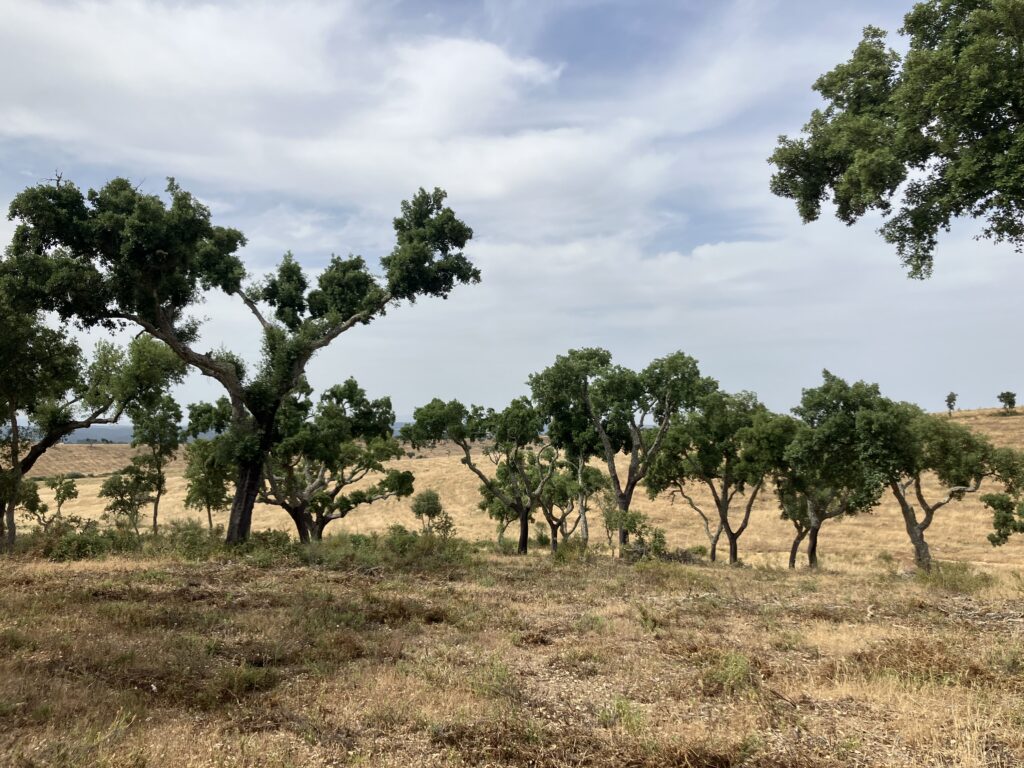
In June 2025, TREAD was launched. Led by the Consejo Superior de Investigaciones Científicas (CSIC, Spain), and with the participation of the University of Córdoba and CoLAB ForestWISE, this project aims to develop an automated system for the early detection of forest vulnerability, using functional parameters and thermal data from remote sensing. Developing models for the early detection of pest and disease symptoms is a challenge due to the limited knowledge of the physiological changes that affect plant functional parameters under stress. Although remote sensing data shows potential for quantifying parameters that provide information about susceptibility to pests and diseases at an early stage, the specific responses to different stress factors remain poorly understood. Furthermore, the spatial and temporal transferability of pest and disease detection models is still limited. The TREAD project aims to overcome these limitations and create a satellite monitoring system of critical disturbance points, facilitating the early detection of changes. The focus of the project will be on areas of Pinus spp. and Quercus spp. affected by water stress and diseases caused by agents such as Phytophthora and the pine wood nematode, along a climatic gradient in Portugal and Spain. Over two years, real-time data will be collected from remote sensing, field measurements and physical models.