
Mata do Buçaco Foundation and ForestWISE unite for fuel management
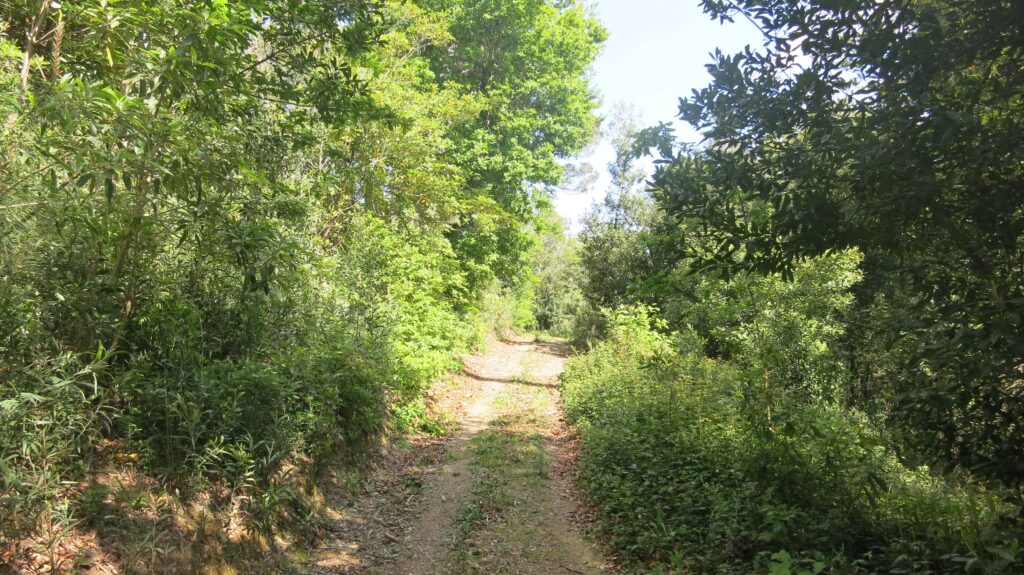
Mata Nacional do Bussaco and CoLAB ForestWISE – Collaborative Laboratory for Integrated Forest and Fire Management are joining forces to guarantee the mission of preserving the heritage of this National Monument, through the REACT-GesCoMB – Fuel Management in Mata Nacional do Bussaco project. The integrated management of the Bussaco National Forest requires particular attention, involving the preservation of the forest heritage and its biodiversity. Rural fires and the proliferation of invasive woody plants within the forest and the surrounding area jeopardise the balance of the ecosystem. This is how the REACT-GesCoMB – Bussaco National Forest Fuel Management project came about, which aims to improve an area of the forest covering more than 60 hectares, divided into 13 plots. This area was selected on the basis of the high and dense load of combustible biomass and the type of vegetation involved in these plots. The project also includes the maintenance of around 1,380 metres of forest road network, in order to promote and facilitate the mobility of fire-fighting vehicles and other vehicles to support the management of the forest. Running until the end of 2023, work on the plots included in the project will begin soon. Consequently, the work may result in temporary restrictions on access to certain areas of the forest. The REACT-GesCoMB project is the result of an application under Call No. 1/REACT-EU/202 More information: Fundação Mata do Bussaco: gabpresidencia@fmb.pt or CoLAB ForestWISE: media@forestwise.pt Download
TransForm project coordinators meet to discuss the agenda’s ambitions and challenges

The coordinators of the 28 projects included in transForm, together with the leaders of the six work packages (WP)/pillars on which the Agenda is organised, met on 1 February in Leirosa, Figueira da Foz, in a workshop organised by CoLAB ForestWISE and Altri Florestal. This workshop aimed to strengthen collaboration and synergies between the participants of each WP, create a common understanding about the projects of each WP and their main results, and structure a clear message about the ambition and challenges of each WP, with the ultimate goal of promoting collaborative strategies in the implementation and execution of the Agenda. During the workshop, the leaders of each WP led working sessions in which the project coordinators identified the relationship and synergies between the various project outputs and discussed individual and transversal challenges to achieve the Agenda’s ambitions. Regarding WP1, which includes nine very diversified projects within the scope of Resilient Forest Management, synergies were highlighted both between the results of the projects with a greater RTD nature and between the projects more focused on generating information to support decision-making. As an example, a strong relationship was identified and, consequently, the existence of possible synergies between the network of permanent plots that will be generated in one of the projects and the digital platform of best practices for the recovery of oak ecosystems to be generated in another project. The main ambitions identified in WP1 were the generation of data and decision support services, the contribution to good forest management practices and the forest sector access information improvement. With regard to the challenges of this WP, the project coordinators have highlighted aspects such as the existence of multiple platforms and their eventual compatibility and interoperability, the difficulty in updating and validating data, the lack of availability of information, the adoption of practices, processes and activities, among others. In WP2, which integrates seven projects dedicated to Green Operations and Logistics, dominated by operations optimisation, processes digitalisation and automation and electric motorisation, several synergies were highlighted between project results. As an example, a strong link was identified between the electric forestry machines and equipment to be developed, with the need to ensure a good electric charging network, as well as good road access. In the WP dedicated to Circular Economy (WP3), with six projects, synergies between some of the projects were highlighted: the group found a strong link between the formulation of blends and new fertilizers, the increased efficiency of fertilizers and the reduction of greenhouse gases. In turn, it was also highlighted that the use of new fertilisers is related to the possibility of using biofertilizers. Regarding the ambitions, the obtention of (bio)fertilisers from industrial by-products, new eco-efficient industrial processes and new industrial processes based on circular economy practices were flagged, with technological maturity being a common denominator in terms of challenges. Finally, in the Markets and Consumers WP (WP4), which integrates five projects related to the valorisation of non-wood forest products, ecosystem services, forest products marketing support, new products and applications of wood for sustainable construction and eco-packaging, potential synergies were also discussed. For example, questions were identified regarding a proposed remuneration instrument for ecosystem services and the need for an assessment and valuation standard. The existence of a digital platform to support trade in forest products is closely related to the development of a brand that is recognised and a reference by its target audience. As for the ambitions of this WP, the group highlighted innovation in the production, distribution and sale of non-timber forest products, an aspect which will bring challenges such as the valorisation of environmental benefits, the competitiveness of the final product, compared for example with plastic-based products, and the medium/long-term benefits of innovation. This workshop was the first of many to encourage greater collaboration between partners and promote the success of the transForm Agenda projects.
Partners of the transForm Agenda woody biomass valorisation project meet to discover the biomass park management model in Penacova
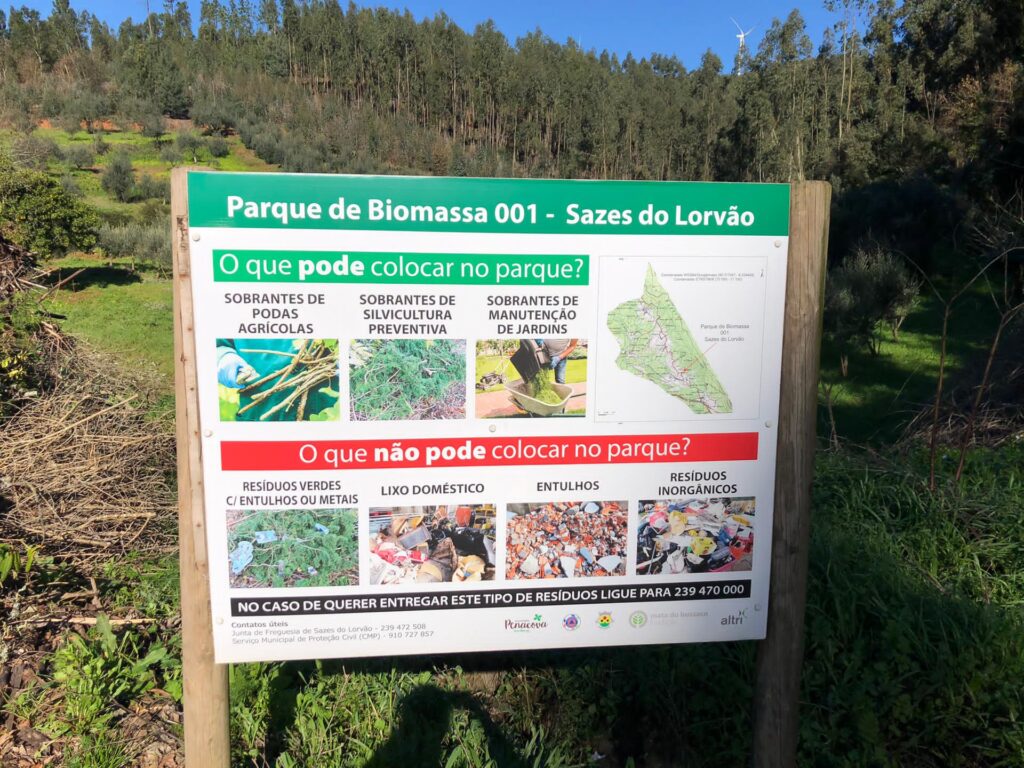
On the 23rd of January, a meeting was held to present the management model of biomass parks of the City of Penacova. Integrated in the project “Regional networks for the valorisation of woody biomass”, of the transForm Agenda, the meeting was promoted by the Coimbra Region Intermunicipal Community (CIM-RC) and held at the facilities of Penacova´s Town Hall, where the main stakeholders in this activity were present, namely Altri Florestal, CBE, CIM-RC, Florecha, Forestis, INESC TEC and the CoLAB ForestWISE. With the participation of the Councilman for the Environment, António Cardoso, the meeting aimed to present the management model of parks for biomass collection implemented in the county of Penacova. These parks have as main objective to provide a service to the population for the deposit of woody waste from the management of their green spaces, enhancing its use for energy production. The partners had the opportunity to visit two of the 13 biomass parks in the city of Penacova (Miro and Sazes do Lorvão), where it was possible to understand their operation and watch the type of waste deposited. This project is part of the transForm Agenda which aims, among several objectives, to contribute to reducing the risk of rural fires, adding value to an initially uselless resource, encouraging the use of renewable energies for energy consumption. Led by Altri Florestal and under the technical and scientific coordination of CoLAB ForestWISE, the transForm Agenda is the largest forestry sector consortium ever created in our country. It brings together 56 partners, including companies from the entire forestry and energy sector value chain (62%), entities from the National Scientific and Technological System (23%), Public Administration (5%) and sector and territorial associations (10%), in an unprecedented effort of sectorial cooperation in Portugal.
Centre Region joins European project to fight climate change
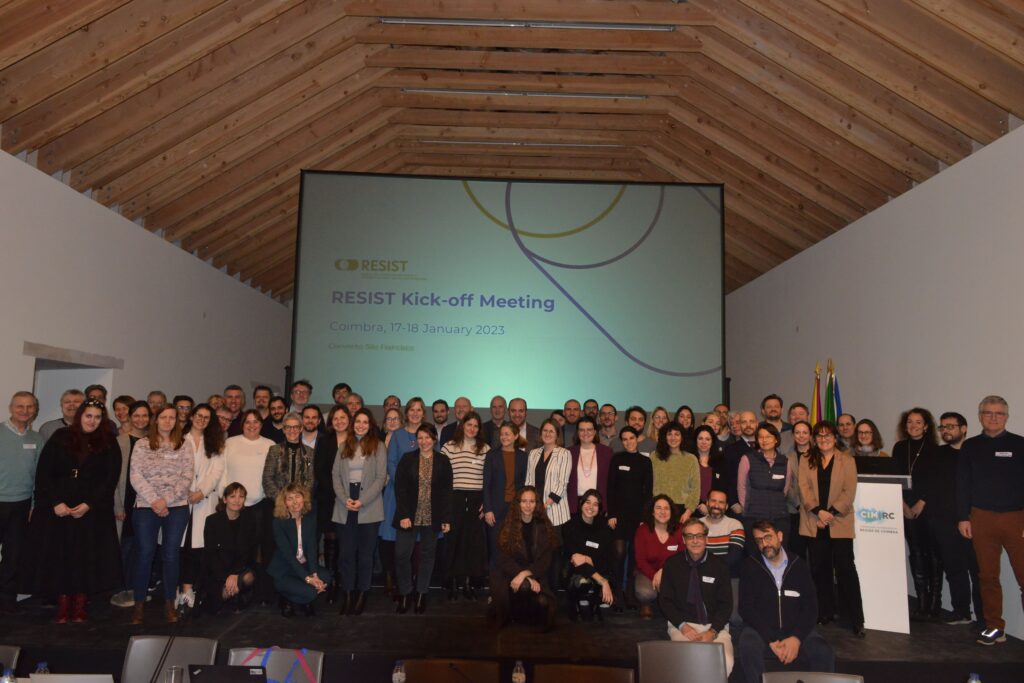
The Centre Region is one of the participants in the European project RESIST – Regions for climate change resilience through Innovation, Science and Technology, which involves the participation of 56 entities (from 15 countries) and a total investment of 26 million euros (more than 5.6 million euros for Portugal). The European project RESIST, whose launch event took place today, January 18, in Coimbra, grants demonstration projects under the climate change adaptation mission of the European Commission’s Horizon Europe programme. With the goal of accelerating the transformation and increasing the resilience of 12 European regions vulnerable to climate change, the RESIST project foresees the development of innovation demonstration projects in four regions and the transfer of knowledge and innovative solutions to eight other regions. One of the demonstrators of this project will be developed in the Central Region (in the territories of the Coimbra Region and the Middle Tejo) and has an estimated budget of almost 2.5 million euros. It is focused on the development of solutions for the promotion of a more effective management and valorisation of the forest, to reduce the effects of climate change in the region, more specifically regarding the occurrence of large rural fires. To this purpose, new practices of soil use and occupation and genetic resilience will be implemented, and bio-circulation of green bio-waste solutions will be tested, using new approaches to valorise forest biomass. The final objective is to define new business models and forms of governance of the AIGP – Integrated Landscape Management Areas and Village Communities (“Condomínio de Aldeia”), contexts in which the research will be developed. For Isabel Damasceno, President of the Centre Region Coordination and Regional Development Commission (CCDRC), “the participation in the RESIST project clearly demonstrates the commitment of the Region to implement policies to combat climate change and mitigate its effects until 2030. Our work, focused on the major problem for the region which is rural fires, will be developed in the context of this large European consortium, benefiting from the knowledge and exchange of experiences with the other partner regions. The Centre region will also be involved in the other three demonstrator projects, focusing on problems that have severely affected the region, such as drought, floods, heat waves and storms. In addition to the CCDRC, which it coordinates, the Intermunicipal Communities of Coimbra and Médio Tejo Region, ForestWise – Collaborative Laboratory for Integrated Forest and Fire Management, the BLC3 Association – Campus for Technology and Innovation, MédioTejo21 – Regional Agency for Energy and Environment of Médio Tejo and Pinhal Interior Sul and the Polytechnic Institute of Portalegre participate in the development of this demonstrator, as well as the regions of Vesterålen (Norway) and Extremadura (Spain), with whom the results will be transferred. The demonstrator will also be monitored by INOVA+, which has an active role in the RESIST project coordination team. This project progress can be followed using the information available on its webpage resist-project.eu. Download
The Forest and Fire in the pandemic times
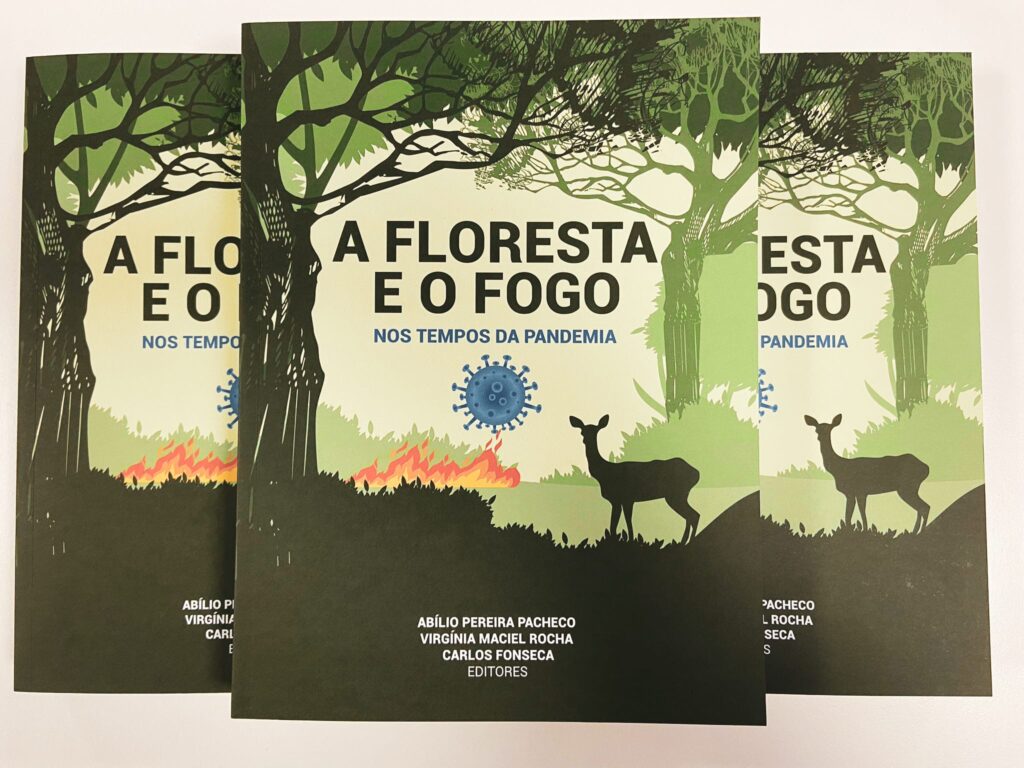
A reflexion promoted by CoLAB ForestWISE now in a book “Forest and Fire in pandemic times” is the first book published exclusively by CoLAB ForestWISE, which counts with the contribution of 62 specialists and individualities from multiple sectors of our society. The book is a compilation of 54 texts resulting from the Virtual Forum organized by ForestWISE in the middle of the pandemic, in which several guests participated and tried to answer about the impacts of the pandemic and the consequent changes expected for the forest and fire sectors in Portugal. “This is a milestone to ForestWISE, as this book represents another disruptive, differentiating and striking element in the forest and fire sectors, revealing not only our boldness and attention to each reality and context, but also our concern for the sector’s agents, our associates, partners, society and people”, said Carlos Fonseca, ForestWISE’s CTO, during the book launch that took place on December 14. On the other hand, José Manuel Mendonça, President of the Board of Directors of INESC TEC and the first President of the Board of the ForestWISE CoLAB, mentioned that “an exceptional circumstance, such as the pandemic, requires an exceptional attitude, and this book is also the result of an exceptional attitude of ForestWISE and its entire team”. The event took place at the Dr. António Cupertino de Miranda Foundation, in Oporto, and was attended by the authors, editors, ForestWISE’s executive team and several relevant guests from the forestry and fire sectors in Portugal. https://www.youtube.com/watch?v=CswxV5pxIhU&ab_channel=ForestWISE-Gest%C3%A3oIntegrada%2CFlorestaeFogo
1st Workshop Innovative Systems to Support Team Management in Rural Fires
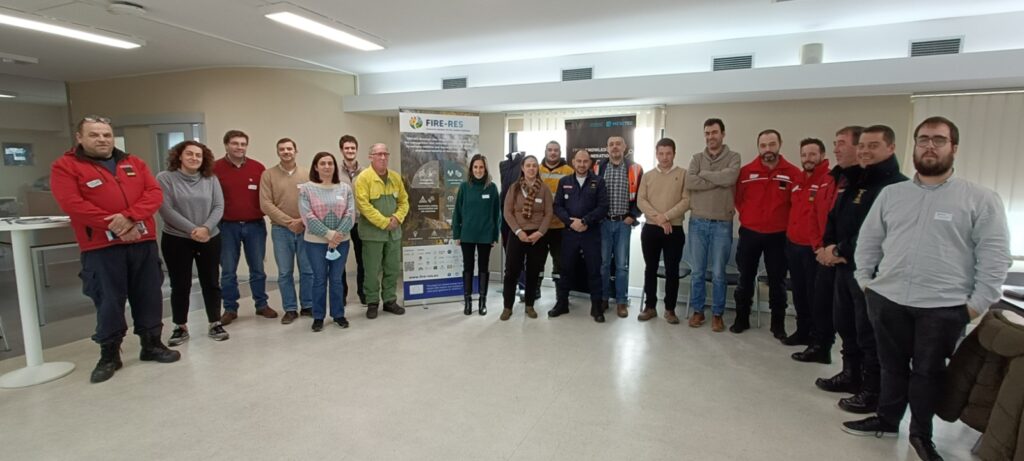
One of the activities proposed by FIRE-RES intends to improve the firefighters’ monitoring system developed by INESC TEC, considering an upgrade of the devices that monitor physiological and environmental data and tank vehicles (environmental data) in real time, in a digital support interface that analyses the fire line (ForestWISE). In order to achieve these goals, ForestWISE, in collaboration with INESC TEC held on 6 December the first Workshop on “Innovative Systems to Support Team Management in Rural Fires”. Hosted by CIM Tâmega e Sousa (Penafiel), the workshop presented the specificities of WP5 (advanced technologies, equipment and decision support systems), regarding the innovation action to “Quantify the impacts of exposure to atmospheric polluents of rural fires, in order to improve fire suppression and management of its impact”. In order to demonstrate and/or validate this innovation action in the demonstration areas of the Portuguese Living Lab and, with the purpose of validate the involvement of voluntary test teams, INESC TEC held a demonstration session focused on the equipment and sensors component. The workshop was attended by 20 people responsible for forest fire teams and local fire commands, as well as the ICNF and ANEPC, whose involvement was essential to boost the co-creation activities for the “Future Firefighter”, a concept that assumes the improvement of the monitoring of teams’ physiological conditions and the environment and the vehicles monitoring for a more effective, safe and optimized combat in the field decision support.
Challenges of integrated fire management discussed at the first FIRE-RES Community of Wildfire Innovation workshop
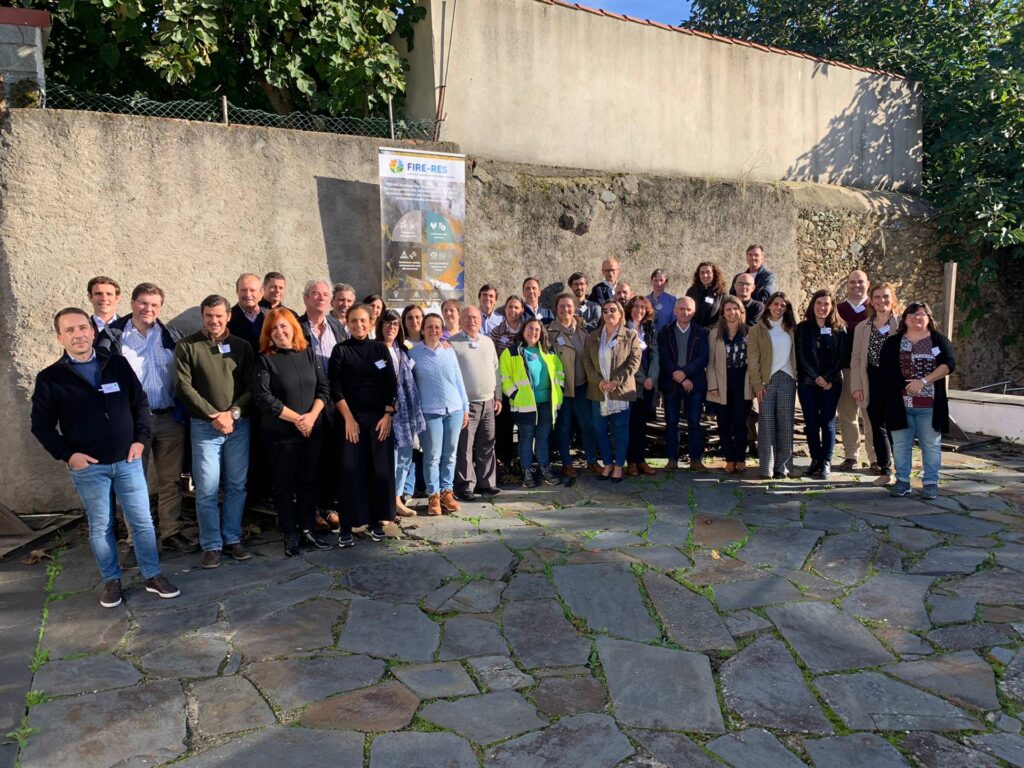
In the Living Labs creation context, FIRE-RES provides the implementation of strategies and actions, applied both at local and regional level and extended for use as instruments of governance on a global scale and under the most diverse conditions. In order to ensure the participation of all stakeholders, FIRE-RES proposed the creation of Communities of Wildfire Innovation (CWI) in each of the Living Labs. Imbedded in the project’s mission, it is crucial to promote a close and collaborative relationship between the various CWI members, as their participation is essential for a better understanding of the state of integrated fire management and for building a common vision for a more fire resilient landscape in 2030. In the Portuguese context, the CWI is made up of strategic actors, with a greater scope for integrated forest and fire management, and of operational actors, directly involved in the innovation actions to be implemented in the demonstration areas. At the same time, it will be important to understand the challenges and gaps of the integrated rural fire management system, in progress in Lousã and in the Sousa Valley, understanding how FIRE-RES can respond to the most emerging challenges. This step requires that the CWI in each Living Lab knows exactly where it is (diagnosis of the current vision) and, mainly, where it wants to go (the ideal scenario in a vision of the future). CoLAB ForestWISE and ISA organised preliminary meetings with CWI stakeholders, on October 21 and 24, in the two demonstration areas of the Portuguese Living Lab, in Penafiel and Lousã, with the support of the Sousa Valley Forestry Association and the National Firefighting School, respectively, to materialize this Community and to present the FIRE-RES project, as well as the innovation actions to be implemented in Portugal. The first CWI workshop took place on November 4, at Lousã´s Ecomuseum, with 34 participants, represented by various public and private sector entities, forest owners, non-governmental organisations and universities. Organised by CoLAB ForestWISE and ISA, and with the support of Lousã Town Council, this event allowed the sharing of knowledge and perspectives about integrated fire management, considering the activity of each participant, and gathered consensus for the various aspects present in a more fire-resilient landscape. In the afternoon session, the participants formed multidisciplinary groups distributed by the three phases of the fire cycle: prevention and preparedness, detection and reaction, adaptation and restoration. In this session, the participants were able to reflect about the current challenges and the path to be followed, considering the changes needed to reach the solutions, and understanding how the FIRE-RES project, with the range of innovation actions, can respond to those same challenges. The slow post-fire restoration, the lack of a shared management, the remuneration of ecosystem services and the low economic profitability of forestry activities were some of the challenges discussed. Possible solutions included the creation of conditions for a rapid response by combat agents, the existence of incentives for reparcelling, with common objectives, and the existence of financial support for activities aimed at remunerating ecosystem services. The workshop dynamics created an enriching debate, which turned out to be brief for the complex issues addressed by the FIRE-RES project. Currently formed by 51 presential members, the CWI is implemented in Portugal, and the conditions are also launched for the next events and demonstration meetings of the innovation actions to become a collaborative and cohesive path that will effectively contribute to a better integrated fire management and to the construction of a fire resilient landscape.
28 projects will transform the forest value chain

The transForm Agenda is born from the growing need to foster cooperation between actors in the forest sector to bring about structural transformations in value chains to respond to the current societal challenges, such as digitalisation, climate transition and carbon neutrality. Under component C5 of the Recovery and Resilience Plan (RRP), related to Capitalisation and Business Innovation, and within the context of the Green Agendas/Alliances for Business Innovation, the transForm – Agenda for the digital transformation of forest value chains into a more resilient and low-carbon portuguese economy – was launched. Led by Altri Florestal and under the technical-scientific coordination of CoLAB ForestWISE, the transForm Agenda is a consortium that brings together 57 partners, from companies across the forestry value chain and the energy sector (62%), universities and entities of the National Scientific and Technological System (23%), public administration (5%) and associations (10%), in an unprecedented effort of sectoral cooperation. These partners will work on 28 collaborative projects that aim to boost the sustainability, circular economy and resilience of the forest, helping to increase the sector’s business competitiveness and exports. In addition, transForm will complement the structural reforms planned in Component 8 of the RRP – Forests, which is mainly the responsibility of the Public Administration. “The development of these projects will give rise to new products, processes and services with high added value and that will drive structural transformations throughout the forest value chain, namely in forest management and fire risk reduction, in territorial valorisation (mainly in low density areas), in circular economy practices in forestry industries, in new digital technologies and forestry equipment, in strengthening markets and consumers and in empowering people and companies, says Carlos Fonseca, Chief Technology Officer of CoLAB ForestWISE. The kick-off meeting of the transForm Agenda took place on Monday 17 October, at the facilities of Altri Florestal, in Olho Marinho, with the presence of the consortium partners, in which the procedures for the following phases were established. The meeting presented the projects that integrate each one of the five main pillars (work packages) The results are expected to contribute to improving management and decision-making by all stakeholders in the forestry sector. “Forests and the forestry sector are drivers of reindustrialisation and socio-economic development, however they face concrete needs, which are intended to be answered by this Agenda, whose objectives were prepared with the actors of the sector”, mentioned at the end of the meeting, Alexandra Marques, Senior Researcher of ForestWISE and member of the coordination team of the transForm Agenda, who also added that they are “very committed to this Agenda, which complies completely with the ForestWISE mission of co-generation and transfer of knowledge and technology on the integrated management of forest and fire”. Running until December 2025 and covering the whole country, transForm will have a total planned investment of around 130 million euros, aimed at productive investment, research, development and innovation, qualification and internationalisation, dissemination and training of human resources. For more information: media@forestwise.pt Download
SMEs share perspectives about agroforestry bioeconomy and circular economy
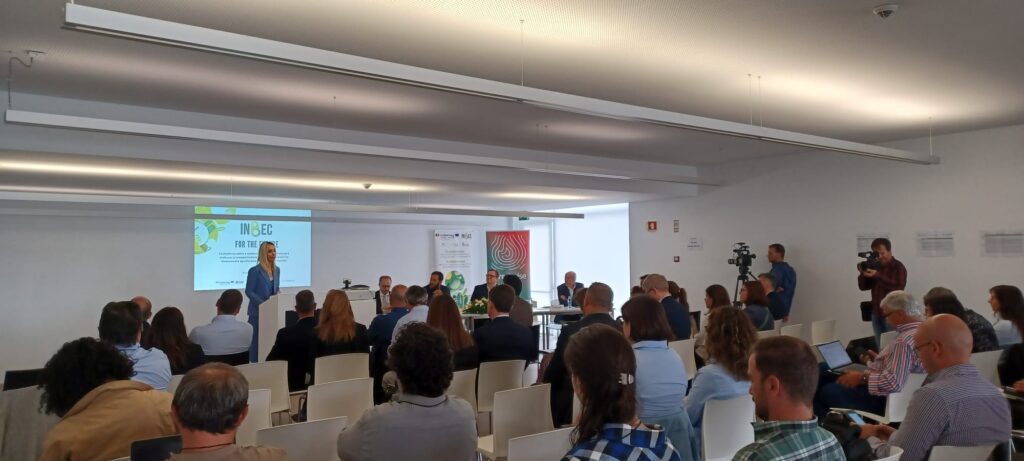
The “INBEC for the future” ended today in Bragança, where more than 70 people contributed to levere project ideas on different key themes for business competitiveness and territorial development. In this initiative, co-financed by the European Regional Development Fund (FEDER) through the Interreg V-A Spain-Portugal (POCTEP) 2014-2020 programme and by the Spanish foundation Cesefor, supported by the Collaborative Laboratories ForestWISE and MORE, the Secretary of State for Regional Development, who attended the opening session, stressed the importance of active cooperation between cross-border territories and the alignment of this initiative with the Regional Development Strategy. She also mentioned the importance of boosting the forestry sector, essential condition for sustainable social development, and also the need for companies to continue working together with the Academy and the Collaborative Laboratories, ensuring the valorisation of the territories, their competitiveness, regional development and, consequently, territorial cohesion. With a high level of participation from companies, this Iberian conference highlighted some key aspects for the development of new business opportunities, namely the digitalisation of the forestry sector, the use of biomaterials and wood in construction, the valorisation of non-wood forest products and forest subproducts and waste, road construction with subproducts from the forestry industry, the commercialisation and management of hunting and fishing resources, the potential of mountain water resources, the valorisation of cultural heritage, among others. In this context of agro-forestry bioeconomy and circular economy, some limitations to the implementation of business strategies were also identified, namely the lack of incentives adjusted to the companies and the territory, the difficulties associated with the structure of forest property, the need to create profitability for forest owners, and the need to retain qualified people and companies in the region that invest in processes that promote bioeconomy and circular economy. The initiative ended with the creation of working groups to develop and present project ideas related to technologies and trends in agroforestry bioeconomy and circular economy. Some of the projects were selected in order to elaborate their conceptual design, and the dynamics of this workshop also allowed the interaction between participants and potential business partners, besides the connection with experts for the planning and implementation of their projects. Following this event, companies can also access, free of charge, specialized support to develop their project ideas and prepare digitalisation and innovation processes, by contacting Cesefor and CoLAB ForetWISE. The main conclusions of this initiative highlighted the need to create innovative solutions in line with the territory need, promoting job creation and the establishment of critical mass in the region, the need to establish more partnerships between companies and entities of the scientific and technological system that promote the cooperation between the two countries, the digitalisation of the agroforestry sector and the promotion and development of new markets related to the bioeconomy and circular economy. For more information, please contact media@forestwise.pt or https://inbec.org Download